
Follow us!
Follow us!
BLOG
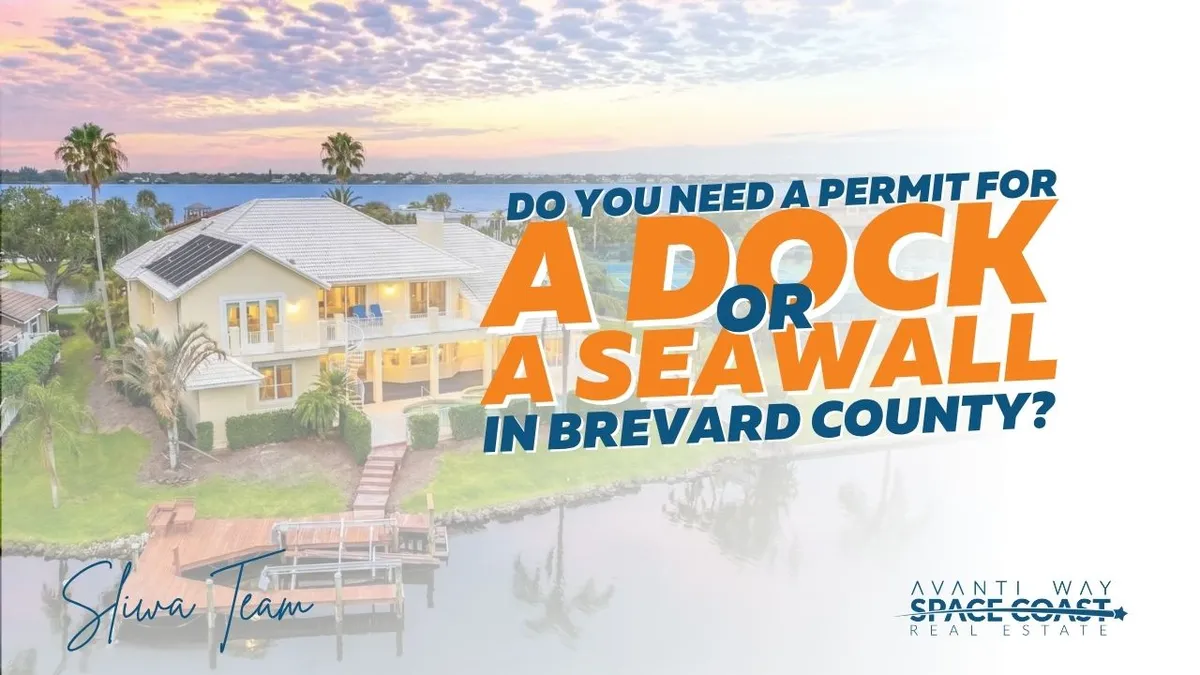
Do You Need a Permit for a Dock or Seawall in Brevard County?
Usually, yes. Most dock, boat lift and seawall work in Brevard County needs a local building permit from your city or the county, even when the state exempts it from a full environmental permit. The state exemption and the local permit are two separate things, and mixing them up is how an unpermitted lift ends up slowing down a closing.
I've lived on a canal on Tortoise Island for 23 years, with a dock, and I've sold 50 homes on this island. Permits are one of the questions I get most from waterfront buyers, usually right after they learn that the home inspection doesn't cover the seawall. This page covers both.
Two sets of rules, because the structure sits in the water
A dock, a lift or a seawall touches two different authorities.
The state side is environmental. The Florida Department of Environmental Protection reviews work in and over the water.
The local side is the building permit. Your city issues it if the house is inside city limits. Brevard County issues it if the house is in an unincorporated area.
Most confusion comes from assuming that if one of them says yes, you're done. You're not.
What the state usually exempts

Under Florida Statute 403.813, a good deal of ordinary residential waterfront work is exempt from a full environmental resource permit, including:
Repairing or replacing an existing dock, as long as the new one sits within 5 feet of the old location, is no larger, and uses no fill.
Restoring a seawall at its previous location, or within 18 inches waterward of it.
A private dock of 1,000 square feet or less of over-water area, and seawalls, in artificially created waterways, like the residential canals behind the beachside towns.
Every one of those exemptions comes with conditions about water quality, navigation and flood control. And "exempt" still means confirming the exemption before the work starts. It doesn't mean nobody needs to know.
What the city or county still requires
Being exempt from the state permit is not the same as needing no building permit. The local building department still issues one for a dock, a boat lift or a seawall.
Satellite Beach: dock and seawall work goes through the city's Community Development Department. Applications need the scope of work, a site plan or survey, and sealed plans where required.
Unincorporated Brevard County: the county issues a Residential Marine Construction permit for docks, seawalls and boat lifts in canals and drainage easements. The county's Natural Resources Management office handles the environmental review.
Indian Harbour Beach, Indialantic and Melbourne Beach each run their own building departments. Call the one that matches the address.
And past a certain point, a repair stops being a repair. Replace enough of a wall or a dock and the building department treats the job as new construction, with the permit and the engineering that come with it. Where that line sits is the building department's call, so ask before the contractor starts, not after.
Why permits matter when you're buying
If you're buying a home on the water, ask two questions before you fall in love with the boat slip:
Were the dock, the lift and the seawall permitted when they were built, or the last time someone worked on them?
Is there an open permit on the property right now?
An unpermitted lift or an open permit can slow down a closing. It can complicate your insurance. And it can turn into your expense to fix after the sale. Your agent can pull the permit history for you, and it's worth doing early.
If you're looking at a waterfront listing right now, send me the address and I'll look up the permit history and tell you what I'd want checked before you write an offer.
Does a home inspection cover the seawall or the dock?
No. This surprises almost every waterfront buyer I work with.
Residential home inspection standards, including the InterNACHI standards most Florida inspectors follow, list seawalls, breakwalls and docks among the items an inspector isn't required to inspect. Your inspector looks at the roof, the electrical, the plumbing and the structure of the house. They don't look below the waterline.
Waterfront structures are a separate inspection. A marine contractor, or an inspector who specifically offers waterfront structure inspections, looks at the pilings below the water, the tie-backs, the condition of the seawall panels, the dock framing and decking, and the lift.
So on a waterfront purchase in Brevard County, it's two calls. The home inspector is the first. The marine contractor is the second. Both need to happen inside your inspection period, and marine contractors can book out, so make that second call as soon as you're under contract.
What goes wrong with a seawall, and what you can spot from the yard
You can catch the early signs yourself before you ever call anyone:
Cracks, spalling or rot along the cap. The cap is the concrete or wood beam along the top of the wall. Rust stains bleeding through concrete mean the steel inside is corroding.
Panels leaning toward the water. Sight down the wall from one end. It should be straight.
Soft spots, dips or small sinkholes in the lawn right behind the wall. That usually means soil is washing out through a joint below the waterline.
Gaps opening at the joints between panels. Same cause.
A dock or patio pulling away from the wall. The wall is moving and the structure attached to it isn't.
None of these tell you what the repair involves. All of them tell you to get a marine contractor out before your inspection period ends.
Who pays for the seawall when you buy a waterfront home?
After closing, you do.
Before closing, it's a negotiation, and that negotiation only exists if you have the marine contractor's report in hand before your inspection period ends. Whatever the two sides agree to during that window is the deal. The day the sale records, the seawall, the dock, the lift and the pilings belong to the buyer, in whatever condition they're in.
That's not a reason to walk away from the water. I live on it. It's the reason to get the second inspection, pull the permit history, and decide with the full picture in front of you.
What waterfront adds to the cost of owning the home
Insurance comes first, and it's usually the biggest line. Roof age, elevation and distance to open water move it more than the neighborhood does. What Is a Wind Mitigation Inspection and What Does It Cost?
Then the structures. A seawall doesn't need money every year, and then one year it needs a lot. A dock and a lift need regular maintenance, and salt air is hard on every motor, cable and fastener out there.
If you're comparing a canal home to a community with its own amenities, the Tortoise Island article breaks down what the HOA dues cover and what stays with the owner. The seawall and the dock stay with the owner there too. Is Tortoise Island Worth the Price?
Frequently asked questions
Do I need a permit to repair my dock in Brevard County? Usually yes, from your city or the county, even if the state exempts the repair from a full environmental permit. Replacing a dock in the same footprint is often exempt on the state side, but the local building permit still applies.
Do I need a permit to replace a seawall? Yes. Restoring a seawall at its existing line is often exempt from the state environmental permit, but the local building department still issues a permit, and engineering is often required.
Who issues dock permits in Satellite Beach? The City of Satellite Beach Community Development Department. In unincorporated Brevard County, it's the county's Residential Marine Construction permit.
How long does a seawall last in Brevard County? It depends on the wall type, the soil behind it and whether the tie-backs were protected. Concrete panel walls on the beachside canals commonly last several decades, and the tie-backs usually fail before the panels do. A marine contractor can estimate the remaining life from the cap, the lean and the yard behind it.
Is a seawall covered by homeowners insurance? Standard homeowners policies generally exclude seawalls, docks and other structures in or over the water. Ask your insurance agent to show you the exclusion in writing before you assume either way.
The short version
Most dock, lift and seawall work in Brevard County needs a local building permit, even when the state exempts it from a full environmental permit. None of those structures are covered by a standard home inspection, and all of them belong to the buyer the day the sale closes. Pull the permit history and get a marine contractor out during your inspection period.
Looking at a waterfront home in Satellite Beach, Indian Harbour Beach, Indialantic or Melbourne Beach? Send me the address and I'll tell you what I'd want checked before you write the offer. Already own on the water and wondering what a sound, permitted seawall does for your sale? Request a home value report and I'll walk you through it.

Do You Need a Permit for a Dock or Seawall in Brevard County?
Usually, yes. Most dock, boat lift and seawall work in Brevard County needs a local building permit from your city or the county, even when the state exempts it from a full environmental permit. The state exemption and the local permit are two separate things, and mixing them up is how an unpermitted lift ends up slowing down a closing.
I've lived on a canal on Tortoise Island for 23 years, with a dock, and I've sold 50 homes on this island. Permits are one of the questions I get most from waterfront buyers, usually right after they learn that the home inspection doesn't cover the seawall. This page covers both.
Two sets of rules, because the structure sits in the water
A dock, a lift or a seawall touches two different authorities.
The state side is environmental. The Florida Department of Environmental Protection reviews work in and over the water.
The local side is the building permit. Your city issues it if the house is inside city limits. Brevard County issues it if the house is in an unincorporated area.
Most confusion comes from assuming that if one of them says yes, you're done. You're not.
What the state usually exempts
Under Florida Statute 403.813, a good deal of ordinary residential waterfront work is exempt from a full environmental resource permit, including:
Repairing or replacing an existing dock, as long as the new one sits within 5 feet of the old location, is no larger, and uses no fill.
Restoring a seawall at its previous location, or within 18 inches waterward of it.
A private dock of 1,000 square feet or less of over-water area, and seawalls, in artificially created waterways, like the residential canals behind the beachside towns.
Every one of those exemptions comes with conditions about water quality, navigation and flood control. And "exempt" still means confirming the exemption before the work starts. It doesn't mean nobody needs to know.
What the city or county still requires
Being exempt from the state permit is not the same as needing no building permit. The local building department still issues one for a dock, a boat lift or a seawall.
Satellite Beach: dock and seawall work goes through the city's Community Development Department. Applications need the scope of work, a site plan or survey, and sealed plans where required.
Unincorporated Brevard County: the county issues a Residential Marine Construction permit for docks, seawalls and boat lifts in canals and drainage easements. The county's Natural Resources Management office handles the environmental review.
Indian Harbour Beach, Indialantic and Melbourne Beach each run their own building departments. Call the one that matches the address.
And past a certain point, a repair stops being a repair. Replace enough of a wall or a dock and the building department treats the job as new construction, with the permit and the engineering that come with it. Where that line sits is the building department's call, so ask before the contractor starts, not after.
Why permits matter when you're buying
If you're buying a home on the water, ask two questions before you fall in love with the boat slip:
Were the dock, the lift and the seawall permitted when they were built, or the last time someone worked on them?
Is there an open permit on the property right now?
An unpermitted lift or an open permit can slow down a closing. It can complicate your insurance. And it can turn into your expense to fix after the sale. Your agent can pull the permit history for you, and it's worth doing early.
If you're looking at a waterfront listing right now, send me the address and I'll look up the permit history and tell you what I'd want checked before you write an offer.
Does a home inspection cover the seawall or the dock?
No. This surprises almost every waterfront buyer I work with.
Residential home inspection standards, including the InterNACHI standards most Florida inspectors follow, list seawalls, breakwalls and docks among the items an inspector isn't required to inspect. Your inspector looks at the roof, the electrical, the plumbing and the structure of the house. They don't look below the waterline.
Waterfront structures are a separate inspection. A marine contractor, or an inspector who specifically offers waterfront structure inspections, looks at the pilings below the water, the tie-backs, the condition of the seawall panels, the dock framing and decking, and the lift.
So on a waterfront purchase in Brevard County, it's two calls. The home inspector is the first. The marine contractor is the second. Both need to happen inside your inspection period, and marine contractors can book out, so make that second call as soon as you're under contract.
What goes wrong with a seawall, and what you can spot from the yard
You can catch the early signs yourself before you ever call anyone:
Cracks, spalling or rot along the cap. The cap is the concrete or wood beam along the top of the wall. Rust stains bleeding through concrete mean the steel inside is corroding.
Panels leaning toward the water. Sight down the wall from one end. It should be straight.
Soft spots, dips or small sinkholes in the lawn right behind the wall. That usually means soil is washing out through a joint below the waterline.
Gaps opening at the joints between panels. Same cause.
A dock or patio pulling away from the wall. The wall is moving and the structure attached to it isn't.
None of these tell you what the repair involves. All of them tell you to get a marine contractor out before your inspection period ends.
Who pays for the seawall when you buy a waterfront home?
After closing, you do.
Before closing, it's a negotiation, and that negotiation only exists if you have the marine contractor's report in hand before your inspection period ends. Whatever the two sides agree to during that window is the deal. The day the sale records, the seawall, the dock, the lift and the pilings belong to the buyer, in whatever condition they're in.
That's not a reason to walk away from the water. I live on it. It's the reason to get the second inspection, pull the permit history, and decide with the full picture in front of you.
What waterfront adds to the cost of owning the home
Insurance comes first, and it's usually the biggest line. Roof age, elevation and distance to open water move it more than the neighborhood does. What Is a Wind Mitigation Inspection and What Does It Cost?
Then the structures. A seawall doesn't need money every year, and then one year it needs a lot. A dock and a lift need regular maintenance, and salt air is hard on every motor, cable and fastener out there.
If you're comparing a canal home to a community with its own amenities, the Tortoise Island article breaks down what the HOA dues cover and what stays with the owner. The seawall and the dock stay with the owner there too. Is Tortoise Island Worth the Price?
Frequently asked questions
Do I need a permit to repair my dock in Brevard County? Usually yes, from your city or the county, even if the state exempts the repair from a full environmental permit. Replacing a dock in the same footprint is often exempt on the state side, but the local building permit still applies.
Do I need a permit to replace a seawall? Yes. Restoring a seawall at its existing line is often exempt from the state environmental permit, but the local building department still issues a permit, and engineering is often required.
Who issues dock permits in Satellite Beach? The City of Satellite Beach Community Development Department. In unincorporated Brevard County, it's the county's Residential Marine Construction permit.
How long does a seawall last in Brevard County? It depends on the wall type, the soil behind it and whether the tie-backs were protected. Concrete panel walls on the beachside canals commonly last several decades, and the tie-backs usually fail before the panels do. A marine contractor can estimate the remaining life from the cap, the lean and the yard behind it.
Is a seawall covered by homeowners insurance? Standard homeowners policies generally exclude seawalls, docks and other structures in or over the water. Ask your insurance agent to show you the exclusion in writing before you assume either way.
The short version
Most dock, lift and seawall work in Brevard County needs a local building permit, even when the state exempts it from a full environmental permit. None of those structures are covered by a standard home inspection, and all of them belong to the buyer the day the sale closes. Pull the permit history and get a marine contractor out during your inspection period.
Looking at a waterfront home in Satellite Beach, Indian Harbour Beach, Indialantic or Melbourne Beach? Send me the address and I'll tell you what I'd want checked before you write the offer. Already own on the water and wondering what a sound, permitted seawall does for your sale? Request a home value report and I'll walk you through it.
GET IN TOUCH!
2825 Business Center Blvd., Suite A-1, Melbourne, FL 32940
Telephone : +1 (321) 425-8552
Web : www.lourdessliwa.com
Email: [email protected]
Follow us!
Follow us!
© 2026 | Avanti Way Space Coast. Privacy Policy
GET IN TOUCH!
2825 Business Center Blvd., Suite A-1, Melbourne, FL 32940
Telephone : +1 (321) 425-8552
Web : lourdessliwa.com
Email: [email protected]
Follow us!
Follow us!
© 2026 | Avanti Way Space Coast. Privacy Policy